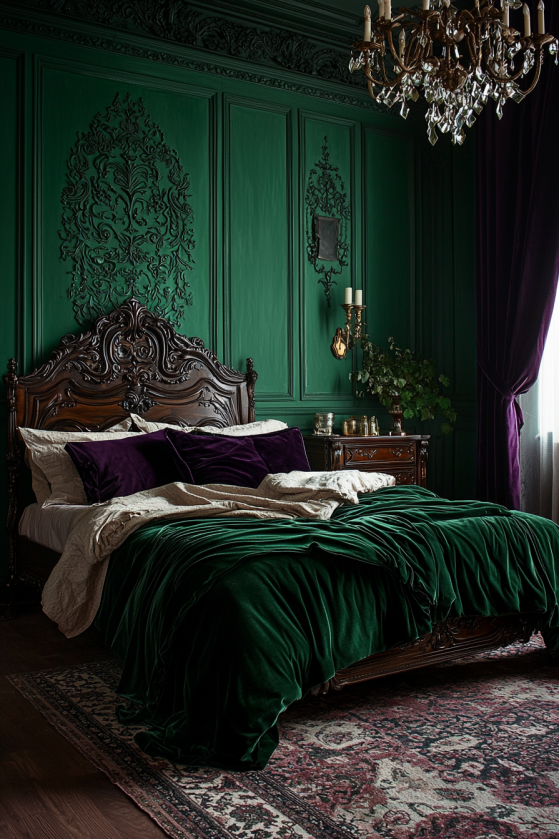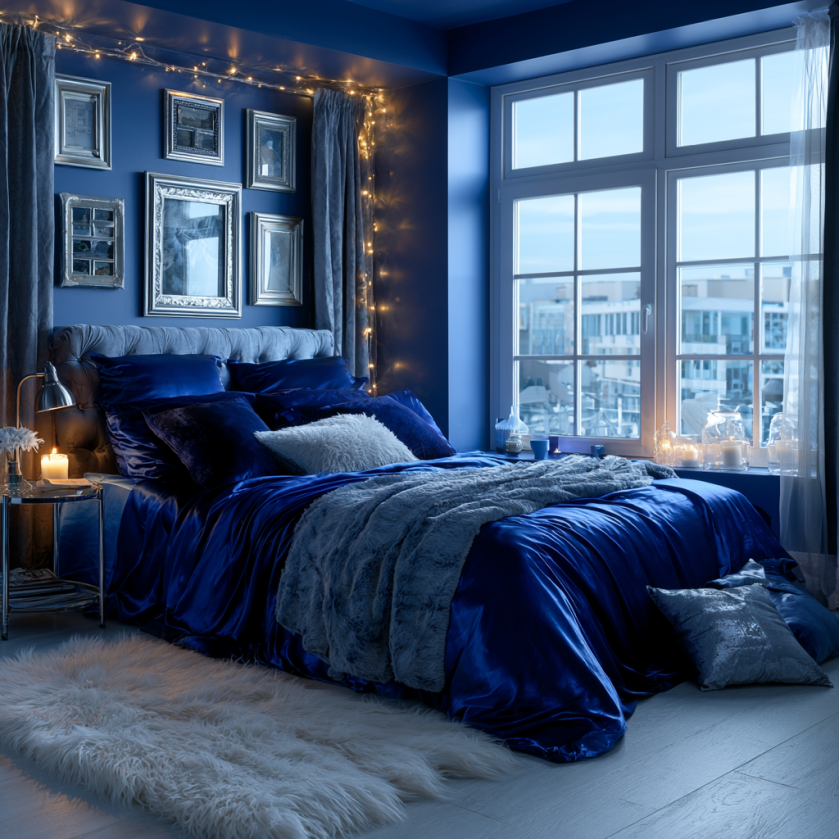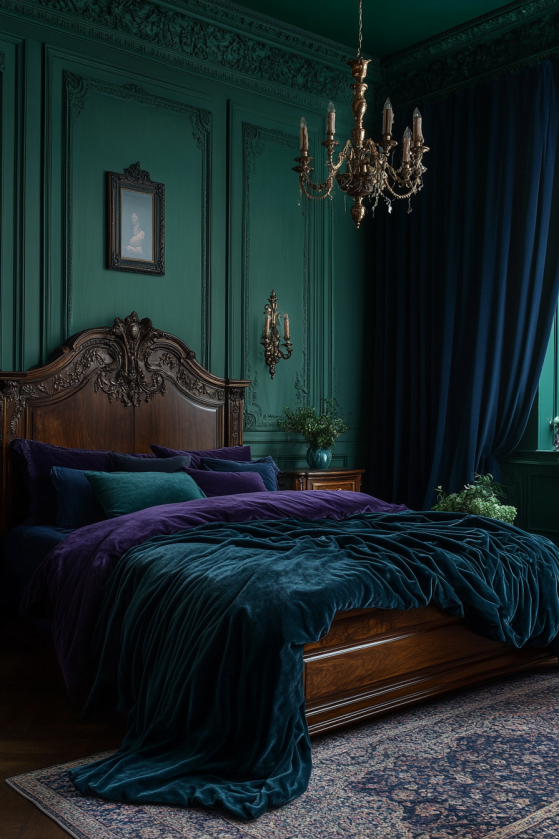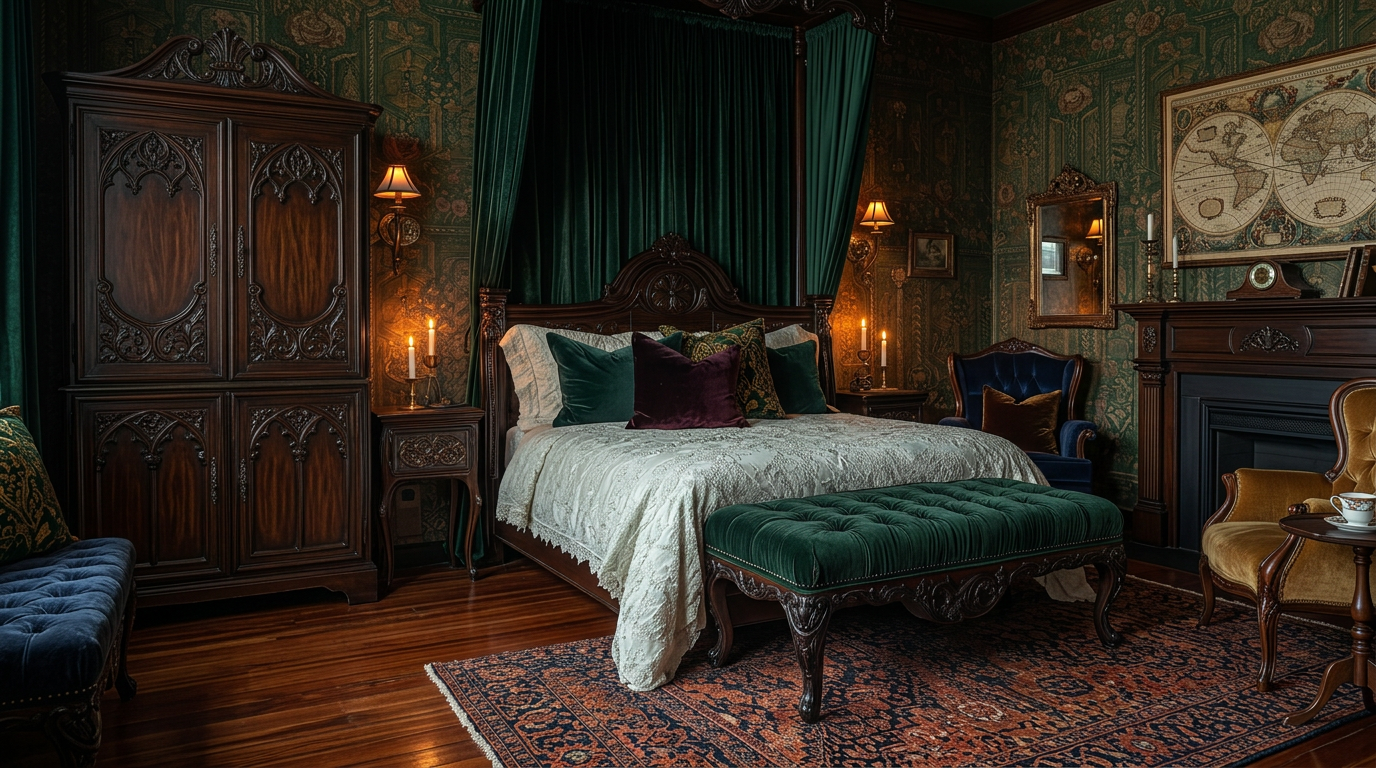
In the hush after midnight the walls themselves begin to drink color, and your bedroom becomes a jewel-box crypt where sleep feels luxurious and eternal.
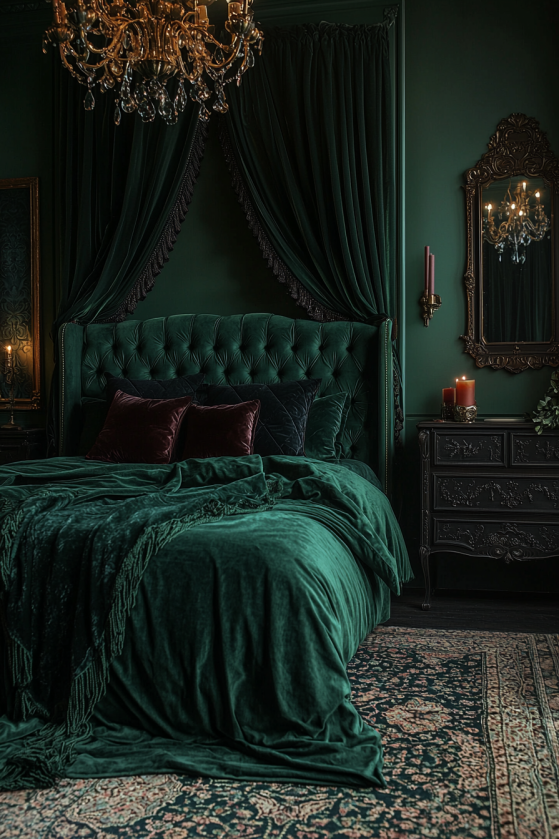
Why Jewel Tones Turn Bedrooms into Sanctuaries
Deep emerald, blood-ruby, and midnight sapphire do not decorate — they envelop. These saturated hues swallow harsh daylight and exhale only velvet shadow. Layer them on walls, bedding, and heavy drapes and the room tightens around you like a jeweled corset. Every breath feels weighted, intentional, deliciously dramatic.
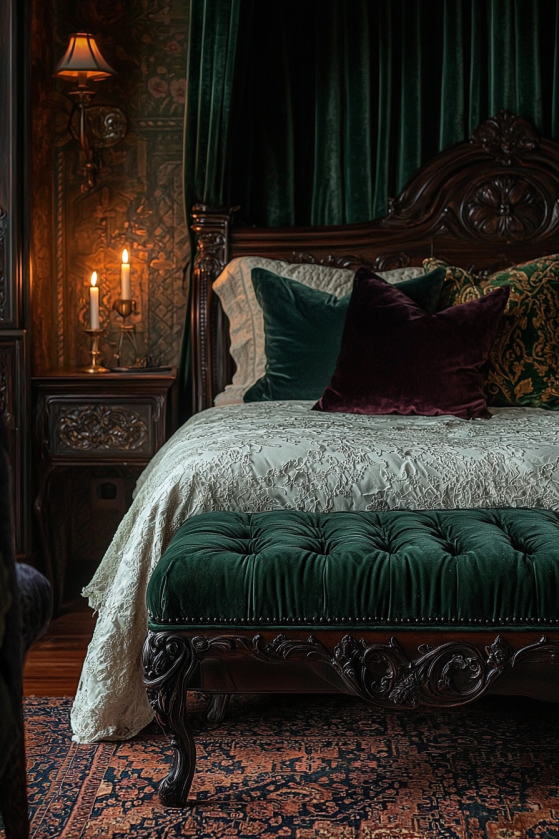
Layering Jewel Tones Without Chaos
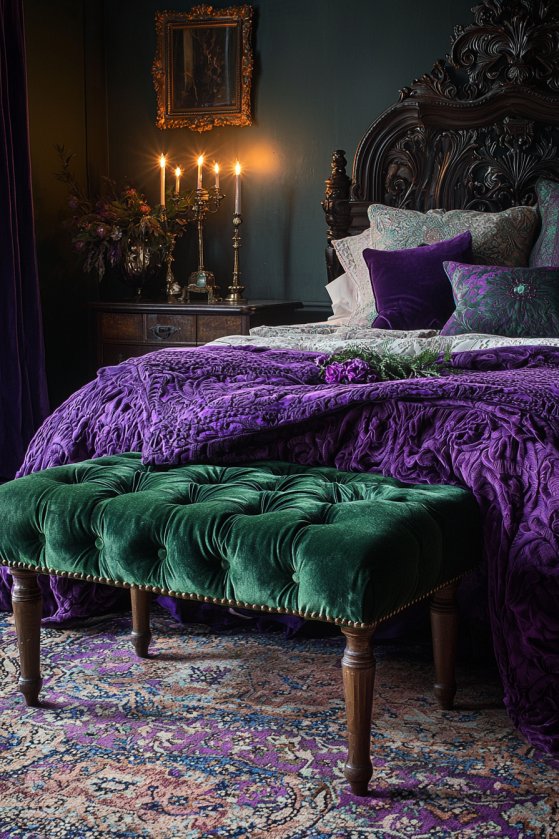
Start with the largest surface — the bed — then echo the same tone in smaller, richer textures: a silk throw in burnished amethyst, a velvet bench in forest green, an antique rug bleeding sapphire and gold. The secret is contrast in sheen, not color. Matte walls against glossy pillows. Candlelight licking the edges of everything.
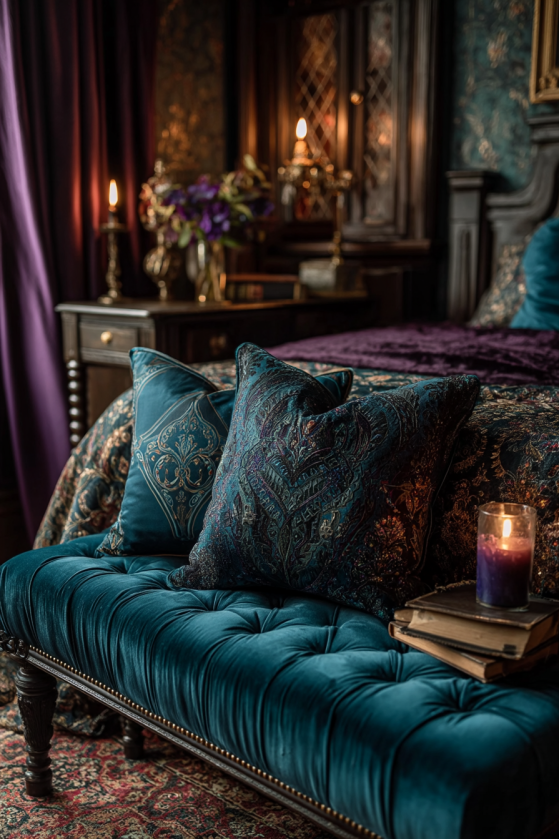
These velvet throw pillows in rich jewel tones will turn any bed into a throne that pinners cannot resist saving and buying. Claim them here and watch the castle coffers fill with every click.
Step through the doorway tonight and let the colors close behind you like heavy theater curtains. Your new bedroom is waiting — dark, drenched, and utterly yours.
Affiliate Statement: Within these shadowed chambers, certain portals open to the merchants of velvet, candlelight, and jewel-toned opulence. Should your hand linger and you choose to pass through them, the castle receives a quiet commission — at no additional cost to your own dark reverie.
The kitchen where the witch lives does not announce itself. It settles into you slowly — first the scent of dried rosemary and dark wood, then the flicker of candlelight against stone, then the quiet certainty that every surface in this room knows something you don’t.
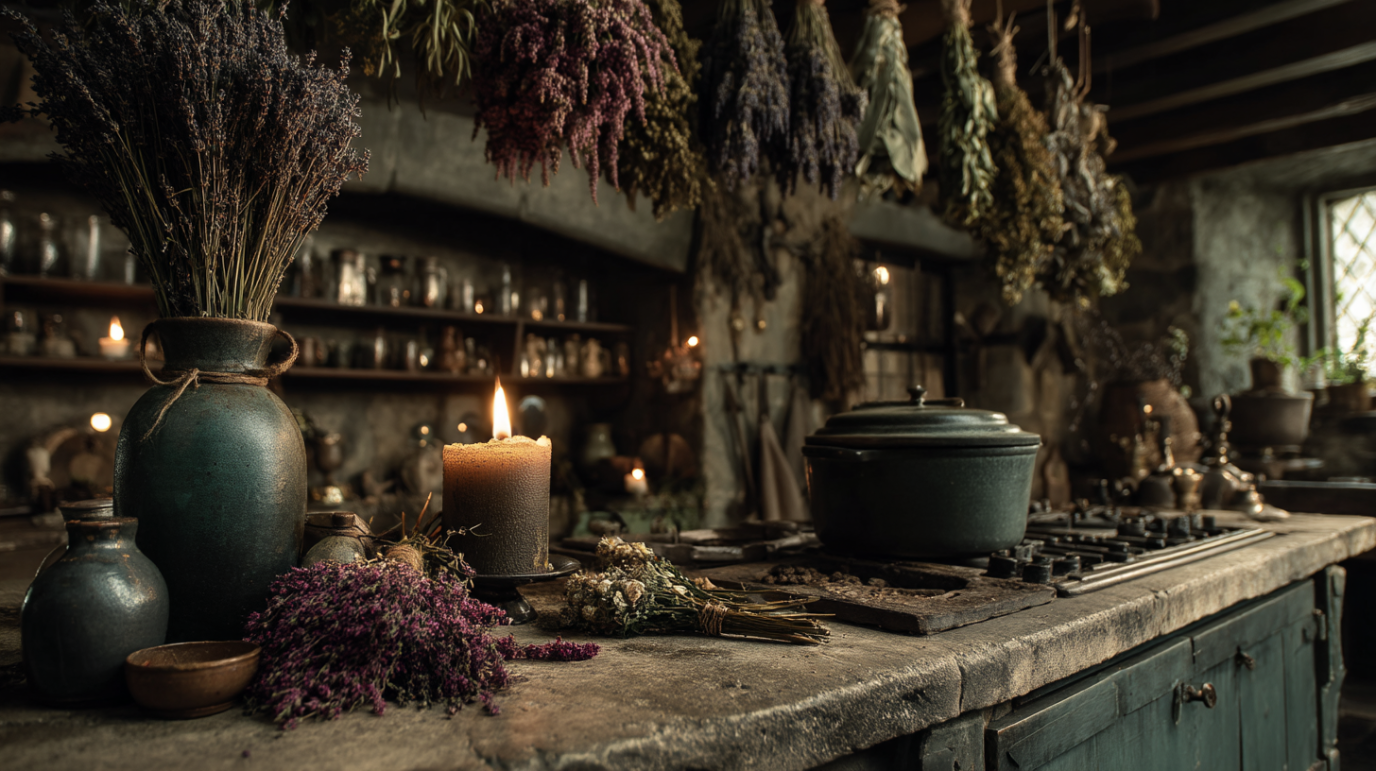
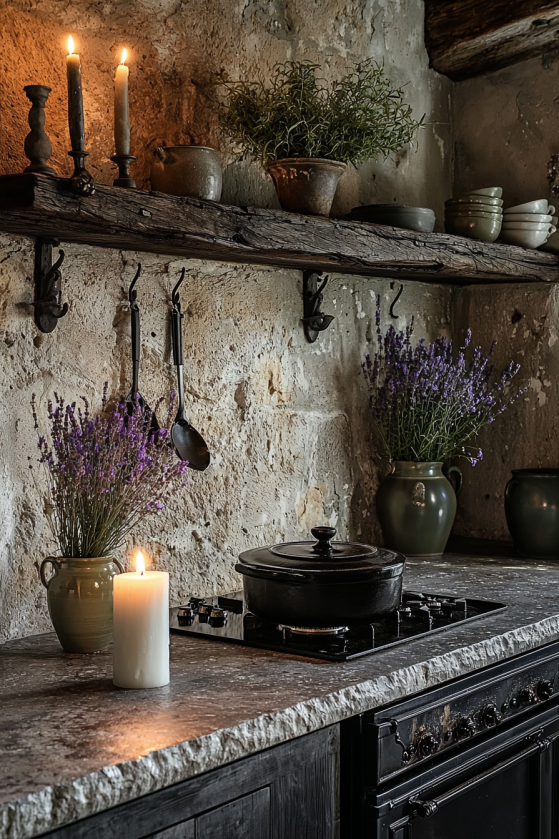
Stone counters that hold candlelight like water. Iron hooks strung with lavender and yarrow. A Dutch oven the color of midnight sitting patiently on the stove, as if waiting to be called upon.
This is cottagegoth kitchen decor: not a trend you layer on top of your life, but a complete world that has always existed — dark, handmade, and deeply intentional — waiting for those who know where to look.
If your kitchen feels too white, too bright, or too modern, this guide was written for you. You don’t need a castle or a farmhouse in the woods. You only need intention, rich texture, darkness used as a design element, and a handful of specific pieces that shift the entire atmosphere of the room.
The cottagegoth kitchen is attainable. It is also — once you truly have it — irreversible.
You will not want to go back.
*This post contains affiliate links. If you purchase through these links, I may earn a small commission at no extra cost to you. I only recommend pieces I genuinely believe in and would use in my own kitchen.*
What Is Cottagegoth Kitchen Decor?
Cottagegoth is the secret marriage of two aesthetics that were always meant for each other.
Cottagecore brings the pastoral romance — dried flowers, handmade ceramics, heirloom plants, and the slow beauty of craft. Gothic adds the shadow: darkness as beauty, ancient materials, drama, and the understanding that ritual lives inside the ordinary.
When these two worlds meet in a kitchen, the result is extraordinary.
A cottagegoth kitchen does not look haunted. It looks inhabited. Inhabited by someone who dries their own herbs, cooks from memory, collects cast iron instead of chrome, and treats the simple act of making tea as something close to ceremony.
The aesthetic is deeply handmade and aged: iron over steel, wood over laminate, stone over composite, dark over pale. Many who arrive here from “dark cottagecore kitchen” searches discover this is the natural next step — the moment the soft pastel pastoral deepens into something older, more serious, and more true.
It sits perfectly between extremes. Unlike gothic maximalism (velvet, grandeur, theatrical excess) or soft cottagecore (light, folkloric, and bright), cottagegoth is practical yet dramatic, warm yet shadowed, domestic yet just slightly otherworldly. It draws from medievalcore and castlecore — the iron, the stone, the candlelight — but brings them into a livable, botanical space that feels like a real home.
Beneath cottagegoth kitchen decor runs an older, quieter current: the kitchen witch tradition.
In folk practice, the kitchen witch turns everyday cooking into quiet ritual. Herbs hung to dry are not merely decorative — they are protection, medicine, and memory. The mortar and pestle is not just a tool, but an instrument of transformation. Every pot simmering on the stove becomes an act of care made visible.
This creates a design language that feels both practical and sacred: counters that resemble working apothecary shelves, dried botanicals that speak of seasons and old knowledge.
It is this deeper sense of purpose and intention that separates a styled dark kitchen from a true cottagegoth kitchen.
If you’ve felt drawn to this aesthetic without quite being able to name why, it is likely the kitchen witch calling you home.
Every cottagegoth kitchen, regardless of size or budget, is built on the same foundation. These are the materials and motifs that carry the aesthetic — the things that, once you introduce them, do the heavy lifting.
Iron
Iron is king. Cast iron skillets left proudly on the stove, wrought iron pot racks overhead, aged iron hooks and pulls — it feels ancient, elemental, and quietly powerful.
Stone
Stone grounds the room. Rough slate counters, stone mortar and pestle, slate trivets — stone holds light differently and gives the kitchen permanence and honesty.
Dark Wood
Dark wood adds warmth. Open walnut or blackened oak shelving, well-loved cutting boards darkened by years of use — it keeps the space from feeling cold.
Dried Botanicals
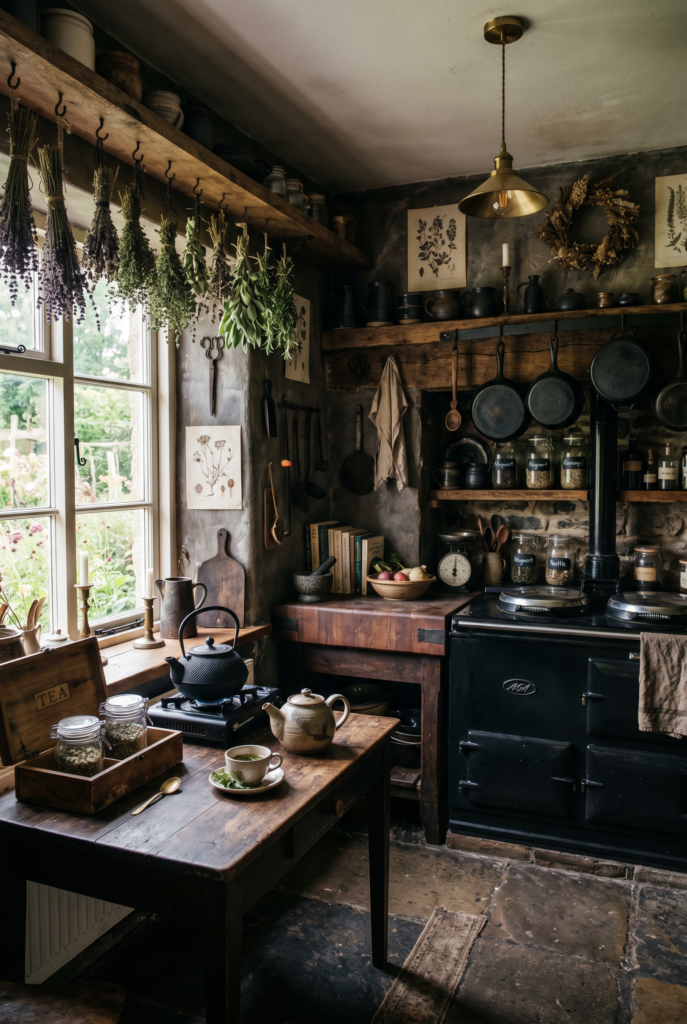
Dried botanicals bring the magic. Generous, slightly wild bunches of lavender, rosemary, sage, yarrow and dark-centred flowers hung from iron hooks or tucked into vintage crocks — nothing transforms the kitchen faster.
Stoneware & Pottery
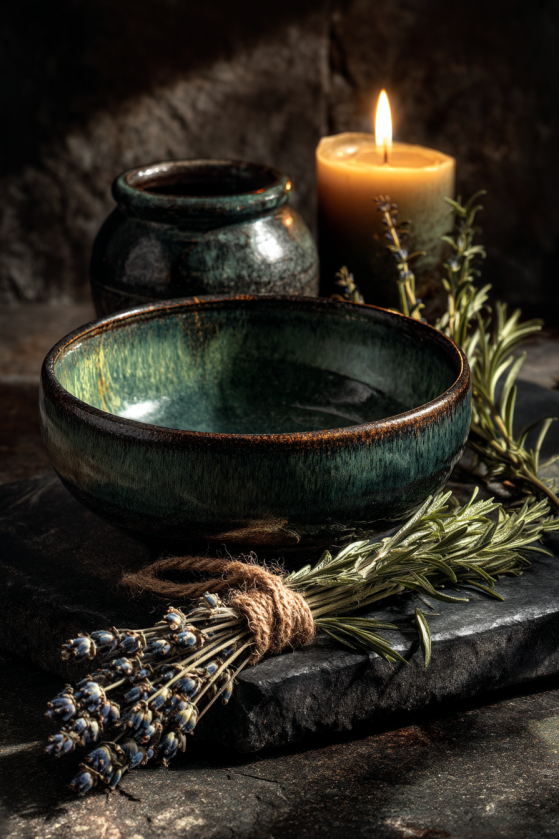
Stoneware and pottery in forest green, slate grey, near-black, or deep terracotta. Handmade finishes, irregular shapes, pieces that look like they were fired in a workshop by someone with earth under their nails. These are the vessels the cottagegoth kitchen reaches for daily.
LAYER YOUR OWN COTTAGEGOTH CORE
Start with Cast Iron as your foundation — a heavy Dutch Oven or Skillet left proudly on the stove. Add Stone for grounding (Mortar and Pestle or slate trivets). Bring warmth with Dark Wood shelving and cutting boards. Finish with Dried Botanicals hanging from Aged Iron Hooks and handmade Stoneware in forest green, slate, and terracotta.
Dark Cottagecore Kitchen Color Palette: Slate, Charcoal, and the Dark Spectrum
The cottagegoth kitchen does not commit to absolute black — that would tip into gothic maximalism. Instead, it works within a living spectrum of dark neutrals that feel organic, aged, and drawn from the earth itself.
Slate and Charcoal
These are the foundational tones — the colour of stone, of deep shadow, of the inside of a root cellar in October. They appear on walls, cabinetry, and grout lines. They are the room’s quiet resting state.
Terracotta and Rust
Warmth in a dark palette comes from these earthy accents. A rust-glazed bowl on a dark shelf or burnt orange dried flowers in a crock keeps the space from feeling cold or sterile.
Dark Forest Green
This is the botanical heartbeat — deep sage, hunter green, and near-black greens that carry the weight of old velvet and the garden just outside the window.
Aged Iron Black
Near-black accents — cabinet hardware, iron fixtures, pot racks, and frame edges — are never pure black. Choose aged iron black, the rich finish that looks as though it has absorbed years of woodsmoke and candle soot.
Natural Cream and Linen
Every dark palette needs breathing room. Undyed linen tea towels, cream-glazed ceramics, and a well-loved wooden spoon left on the counter give the eye a place to rest and make the darker tones feel even richer.
Cottagegoth Kitchen Statement Pieces Worth Investing In
A cottagegoth kitchen does not need an expensive renovation. It needs a small handful of high-impact pieces that anchor the entire aesthetic. Invest here first — everything else will follow naturally.
The Cast Iron Dutch Oven
This is the undisputed centrepiece. A dark enamel Dutch oven in deep sage, artichaut, grenadine, or matte black sets the visual tone for the whole room. Leave it on the stove — it cooks beautifully and looks like it belongs there.
The Iron Pot Rack
Ceiling-mounted or wall-mounted, a wrought iron pot rack transforms the kitchen more than almost any other single piece. Cast iron hangs in the air, dried herbs share the hooks, and the room suddenly feels three-dimensional and theatrical.
The Dark Enamel Kettle
A vintage-inspired matte black or deep forest green kettle on the stove or counter acts as the kitchen’s punctuation mark. When the water begins to boil it sounds like rain — a small daily ritual that feels quietly magical.
The Stone Mortar
and Pestle Always on the counter, always suggesting transformation. A heavy granite or lava stone mortar and pestle is both functional and deeply decorative — an ancient object living comfortably in modern daily life.
Gothic Kitchen Open Shelf Styling for the Cottagegoth Aesthetic
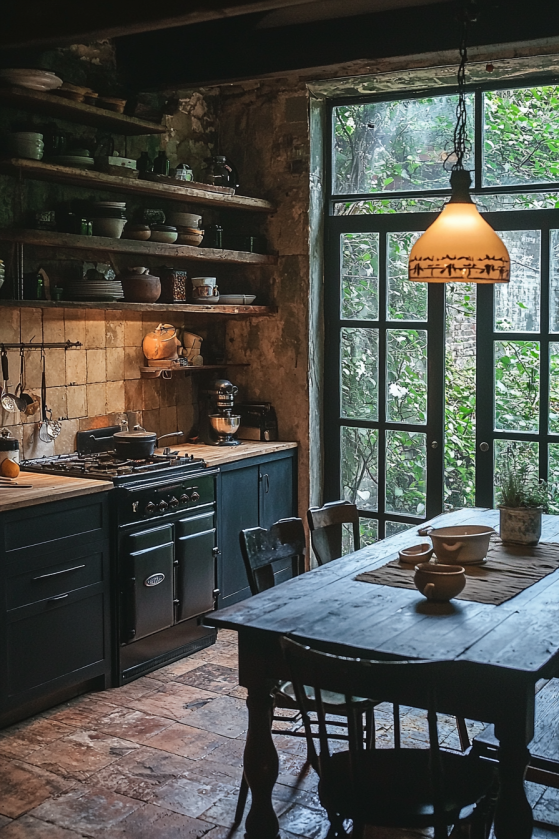
Open shelves are the most expressive surface in the cottagegoth kitchen. Style them with intention and the whole room feels like a unified, lived-in world.
Lead with Apothecary Jars
Clear and amber glass jars with cork or metal lids turn pantry staples into a beautiful display. Fill them with dried herbs, whole spices, black lentils, sea salt, and lavender. Label them in a serif or hand-lettered script. A collection of apothecary jars is the visual signature of the kitchen witch shelf.
Layer in Dried Botanicals
Hang generous, slightly wild bunches of lavender, rosemary, sage, yarrow, and dark-centred flowers from the shelf brackets or lay them loosely across the back. The gentle dishevelment is part of the charm.
Mix Heights & Leave Breathing Room
Vary the horizon line deliberately — tall bottles beside low bowls beside bundled herbs. Leave intentional space between objects so each piece can breathe. Overcrowding reads as clutter; thoughtful pauses feel intentional and old.
Add Candlelight
Small votives or pillar candles placed safely on the shelves turn the arrangement into something closer to an altar. In the cottagegoth kitchen, the shelf is always, just a little, sacred.
Witch Kitchen Aesthetic Lighting: Candles, Iron Fixtures, and Pendants
Candles as the Foundation
In the cottagegoth kitchen, candles are not atmospheric extras — they are structural. Thick pillar candles on iron holders, small votives glowing on open shelves, and elegant tapers flickering in wrought iron candlesticks on the counter.
The light they cast moves and breathes. It does something magical to stone surfaces and dark ceramics that no electric fixture can replicate — it makes everything feel truly alive.
Dark Kitchen Aesthetic: Finishing Details That Make It Feel Real
The difference between a cottagegoth kitchen that photographs well and one that truly lives lies in the finishing details. These small, deliberate choices turn a styled room into a living world — the accumulation of a hundred quiet, intentional moments.
The Right Tea Towels
Linen, never terry cloth. Natural undyed linen or cream with deep botanical prints, hung slightly askew on an iron rail. One of the least expensive and most effective touches in the entire kitchen.
Vintage Ceramic Crocks & Pitchers
Old-looking vessels for wooden spoons, spatulas, and utensils. A dark glazed crock or wide-mouthed pitcher feels beautiful and purposeful. Plastic has no place here.
A Worn Wooden Cutting Board
Darkened by years of use or seasoned with oil. Propped against the backsplash or hung from a hook — a working object that has earned its patina.
Dark Soap Dispensers & Dish
Brushes Matte black ceramic, aged metal, or natural wood and sisal. These visible everyday tools signal that the whole room was thought through.
Cookbook Styling
A stack of old, heavy cookbooks with worn spines facing outward, pages marked with slips of paper or dried flowers. Books make the kitchen feel intelligent and lived-in.
The Seasonal Element
A pumpkin in October, holly in December, forced hyacinth in February, or deep burgundy dahlias in September. The cottagegoth kitchen responds gently to the seasons outside.
This post contains affiliate links. If you purchase through these links, I may earn a small commission at no extra cost to you. I only recommend pieces I genuinely believe in and would use in my own kitchen.
These are the specific, high-impact pieces that do the most work when building a cottagegoth kitchen — whether you’re starting from scratch or transforming what you already have.
1. Cast Iron Dutch Oven — Sage, Artichaut or Matte Black The undisputed anchor piece. A deep-toned enamel Dutch oven sets the visual tone for the entire room. Le Creuset and Staub quality is generational — leave it on the stove and it becomes both tool and sculpture.
2. Wrought Iron Pot Rack (Ceiling or Wall Mounted) The single most transformative purchase. Hang your cast iron, patinated copper, and dried herb bundles together. The overhead drama instantly makes the kitchen feel theatrical and complete.
3. Granite or Lava Stone Mortar and Pestle (Large) Always on the counter. Always suggesting alchemy. Heavy, ancient in design, and deeply satisfying to use — this is the object that turns everyday cooking into quiet ritual.
4. Lodge Cast Iron Skillet (10″ or 12″) The everyday hero. Pre-seasoned, durable, and only improves with use. Leaving it out on the stove is not laziness — it’s decoration and proof that this kitchen actually cooks.
5. Amber Glass Apothecary Jars with Cork Stoppers The visual signature of the kitchen witch shelf. Fill them with dried herbs, spices, salt, and botanicals. Label them by hand. Nothing else transforms open shelving faster.
6. Dried Herb Bundle Kit — Lavender, Sage, Rosemary & Yarrow The fastest, most affordable way to shift the entire atmosphere. Hang them generously and slightly wild from iron hooks — the smell and texture alone make the kitchen feel alive.
7. Wrought Iron Candleholder Set — Mixed Heights Pillar and taper holders in wrought iron or matte black. A grouping of three at varying heights creates an altar-like glow that no electric light can match.
8. Dark Enamel Stovetop Tea Kettle Vintage-inspired matte black, deep forest green, or slate. It sits on the stove even when not in use and turns the simple act of boiling water into a small daily ceremony.
9. Handmade Stoneware Ceramics — Forest Green, Slate & Terracotta Beautiful hand-thrown stoneware with reactive glazes and organic, irregular shapes in the signature cottagegoth palette. These pieces have the imperfect, workshop-made quality that makes them feel alive and personal. Use them daily — they only get better with time and love. Perfect for: open shelf styling, everyday tableware, and giving your kitchen that authentic handmade soul.
The Kitchen Becomes the Room You Return To
The cottagegoth kitchen is not designed in a weekend. It accumulates, like all honest aesthetic choices, over time. A Dutch oven here. A bundle of dried sage there. The pot rack that changes everything. The day you finally replace the plastic utensil holder with a dark ceramic crock and feel the whole room exhale.
It is a kitchen built for someone who understands that the daily act of cooking is sacred — that the tools deserve to be beautiful, that beauty is not brightness but depth, texture, shadow, and the particular quality of candlelight reflected in old stone. It is a gothic farmhouse kitchen decor vision in its truest form: not a stage set but a working kitchen that happens to be extraordinary. It is a kitchen that looks like it has always existed, even when you have only just begun to build it.
Start with iron. Start with one piece that carries weight — literally and aesthetically. The rest will find its way to you.