Dark jewel tones are not trends — they are inheritance. They belong in rooms that remember candlelight and secrets.
Selecting Your Core Palette
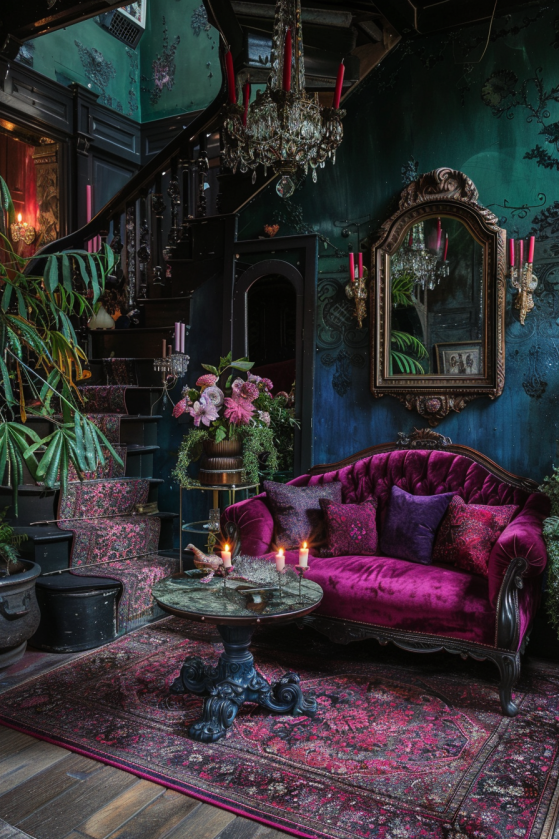
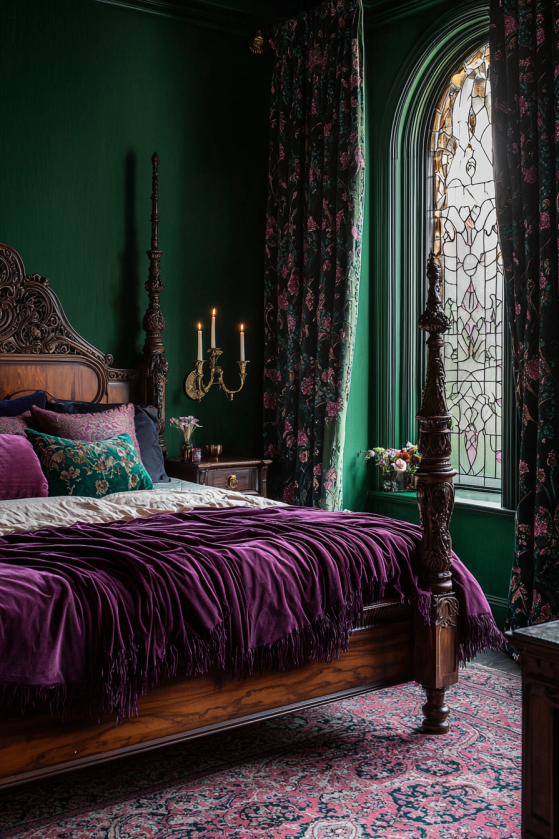
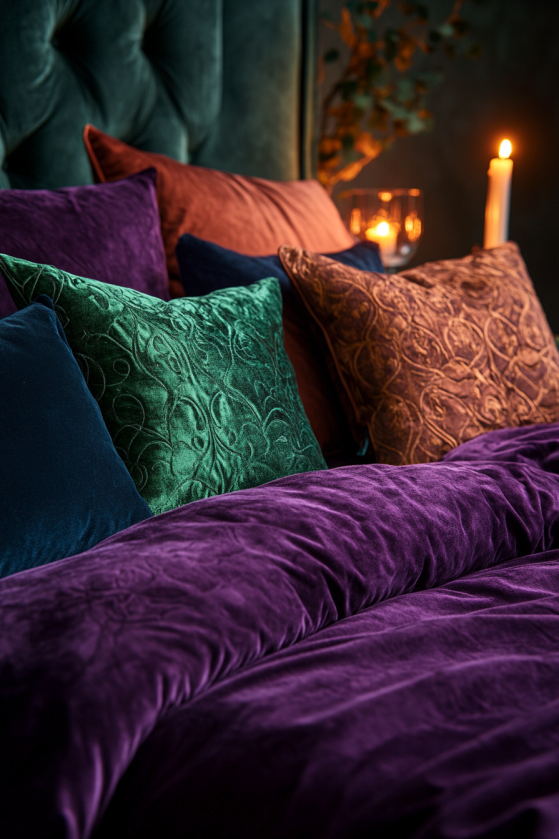
Choose no more than three tones: one dominant (emerald or oxblood), one supporting (sapphire or amethyst), and one metallic thread (aged gold or blackened silver). These colors conspire rather than compete. They deepen the shadows instead of fighting them.
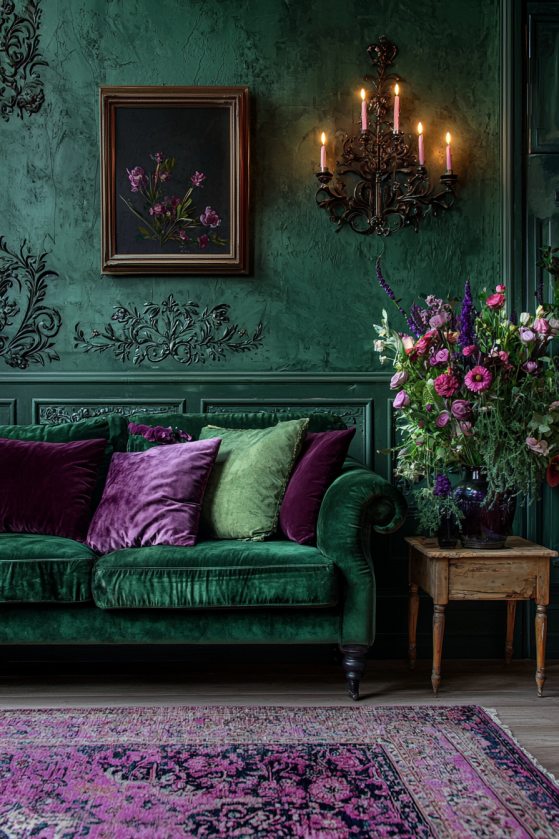
Jewel tones carry emotional weight. Emerald holds the cool hush of hidden forests. Oxblood velvet speaks of old libraries and midnight wine. Sapphire carries the electric calm of twilight just before the stars appear. Amethyst glows with the inner fire of crushed glass on forgotten altars. When you limit the palette to three, the eye rests. The room exhales. More than three tones and the eye begins to dart, unable to settle into the sanctuary you are building.
Live with your choices. Paint large samples and watch them through an entire day. North light cools them; late afternoon light sets them ablaze. The version that still sings when the sun is gone is the one you keep.
Layering for Maximum Drama
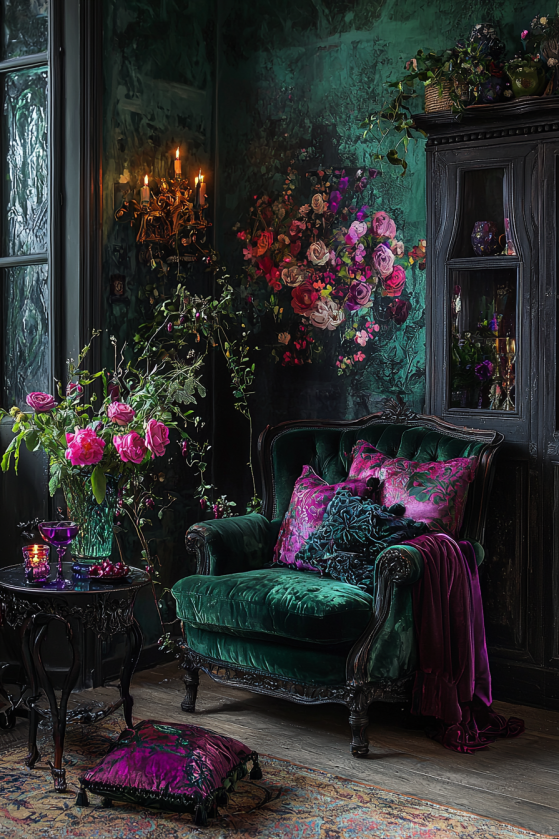
Begin on the floor with a dark jewel tone rug. Move upward through walls and largest upholstered pieces, then finish with smaller accents. The eye travels from shadow to gleam, from weight to light.
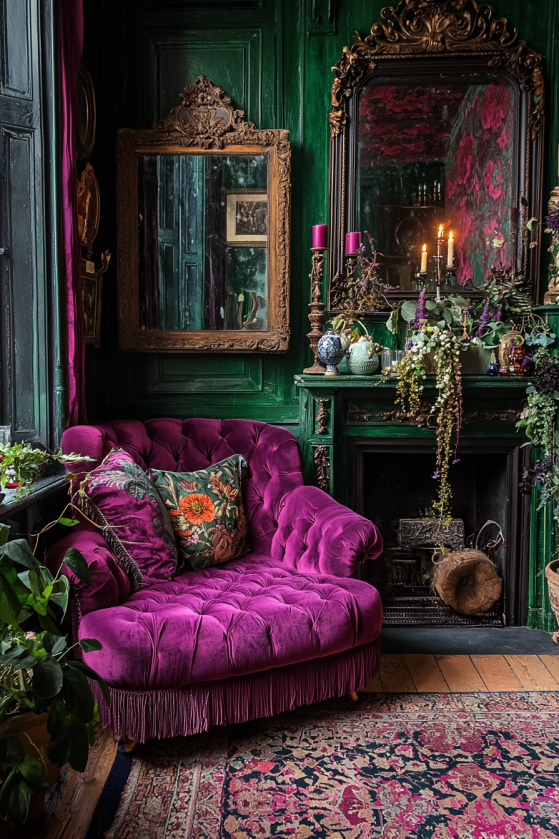
Use the 60-30-10 rhythm, but let it feel luxurious rather than mechanical. Sixty percent lives on the walls or the largest sofa so the room feels wrapped. Thirty percent appears in curtains, an ottoman, or a second chair. Ten percent lives in the pillows, throws, and objects that catch the light like jewels in a crown.
Texture does the real work: matte velvet against cool silk, rough aged wood against hard brass. A velvet sofa against a matte emerald wall feels like sinking into moss at midnight. The room begins to breathe.
The Emotional Power of Dark Jewel Tones
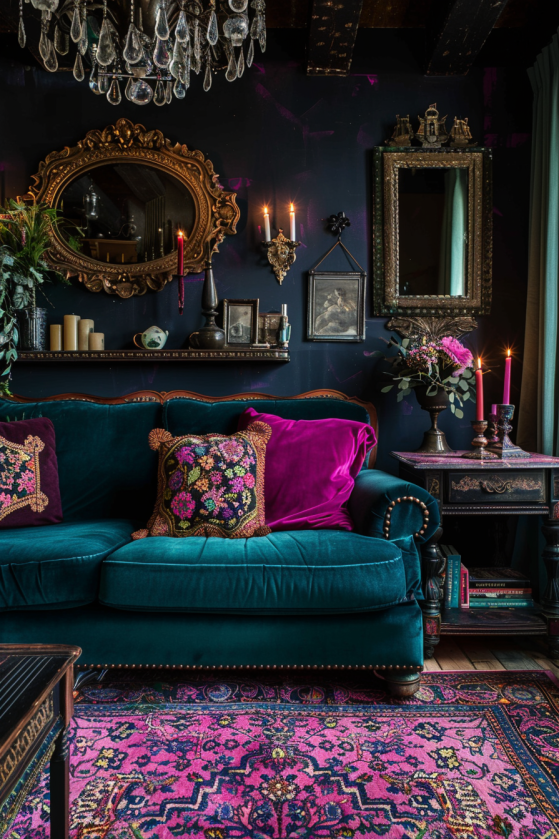
These colors do not decorate — they protect. In a world of harsh screens and endless noise, a room wrapped in deep emerald or oxblood becomes a place where the nervous system can finally lower its guard. Saturated jewel tones invite longer dwell time and create a sense of intimacy and safety. They do not depress; they restore.
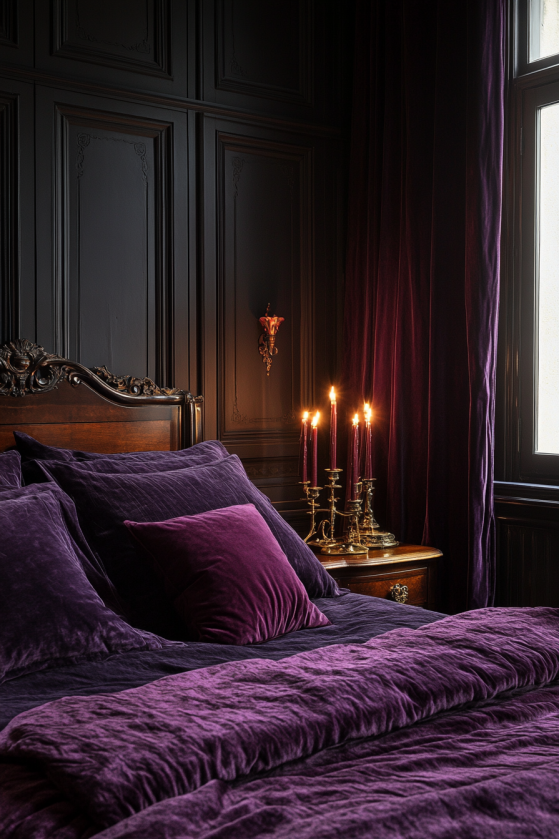
In the bedroom they become a cocoon. In the living room they turn an ordinary evening into a private ritual. The darkness says: the outside world can wait. Here, you are held.
Lighting and the Jewel Tone Glow
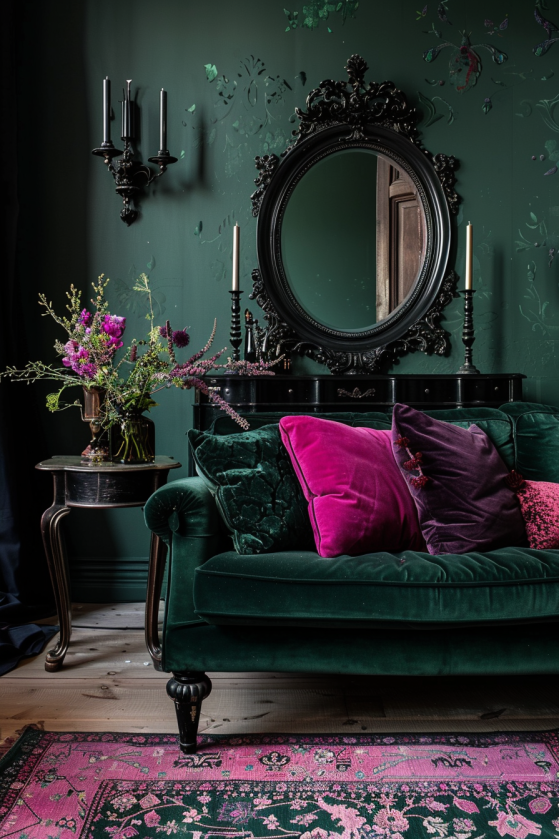
Candlelight is the truest ally of these colors. Warm flame makes emerald look alive, oxblood liquid, sapphire deepen toward midnight. Cool LEDs flatten the saturation and steal the magic.
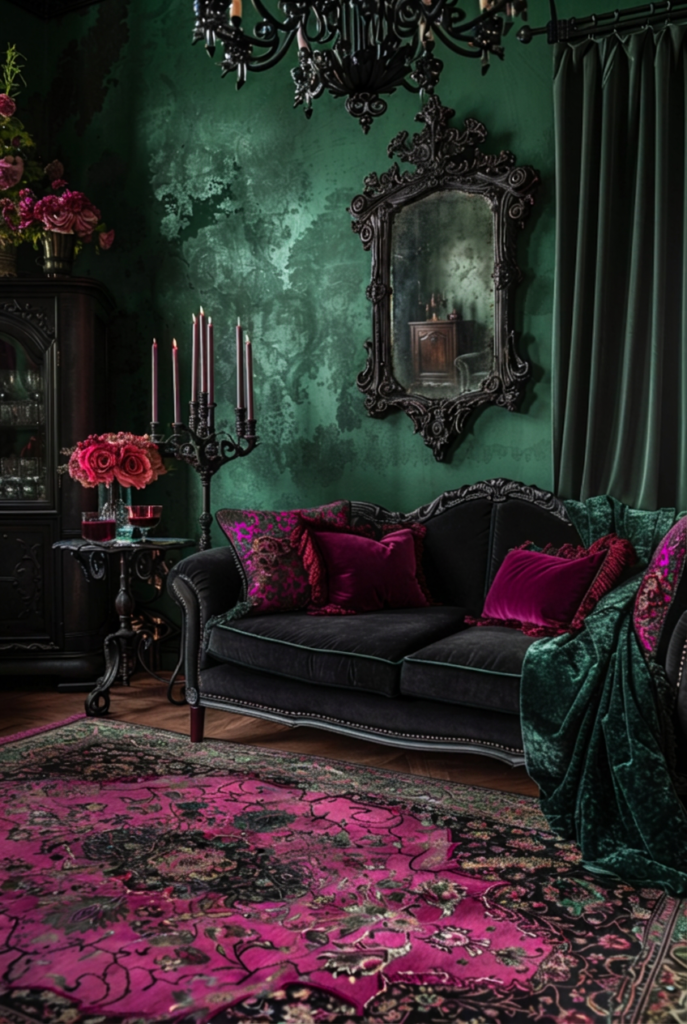
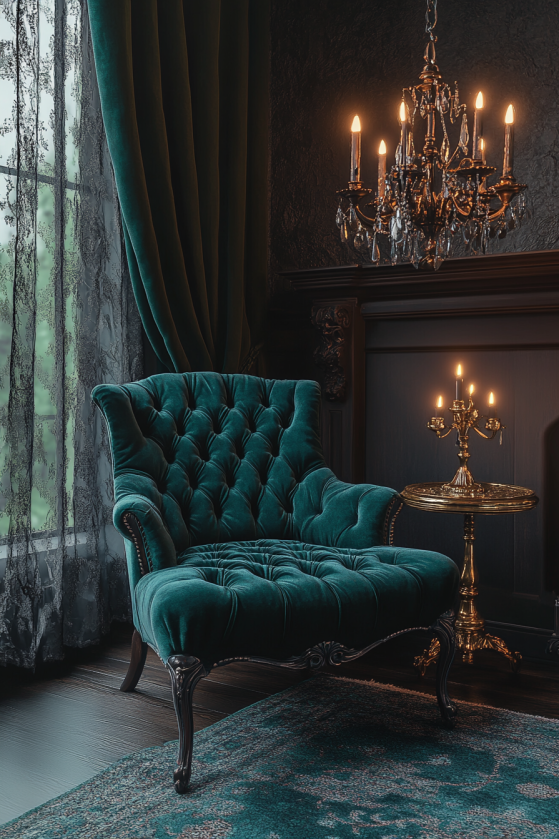
Layer your sources. A central chandelier or pendant in aged brass or blackened iron gives the room its crown. Table lamps with dark shades create intimate pools of light. Wall sconces bounce the glow back into the space. And always keep real candles. The flicker is not decoration — it is the spell.
Common Pitfalls and How to Avoid Them
The quickest way to ruin the effect is to let the palette become a rainbow. Four or five competing deep colors create visual noise instead of quiet luxury.
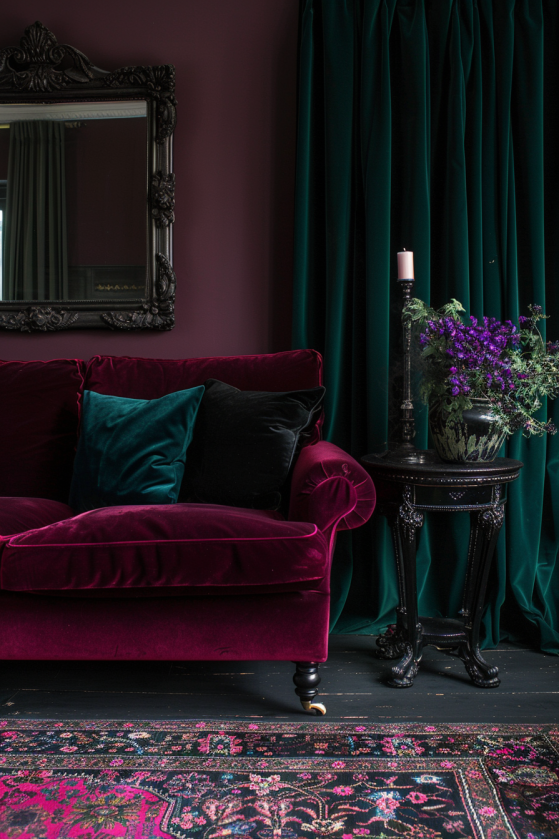
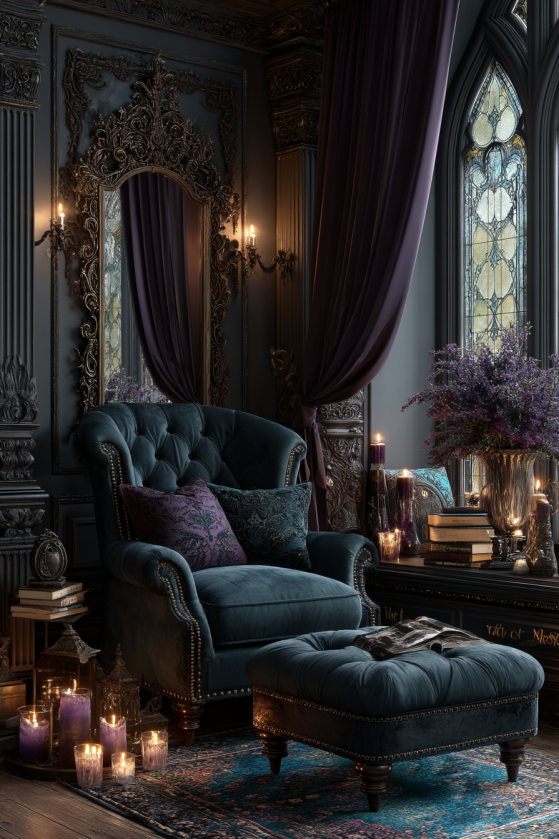
Another mistake is choosing thin, shiny fabrics that have no body under real light. Real velvet drapes with gravity and holds shadow in its folds. Invest in fewer pieces of better quality.
Finally, do not fear the dark. Many people lighten everything “to brighten the room.” A well-layered dark jewel tone room often feels larger because the eye travels into the shadows instead of stopping at a flat wall. The drama creates depth.
Leave a Reply